Honoring Our Fathers
Father and young son at river on a summer day. / Getty image for Unsplash
Remembering Daddy
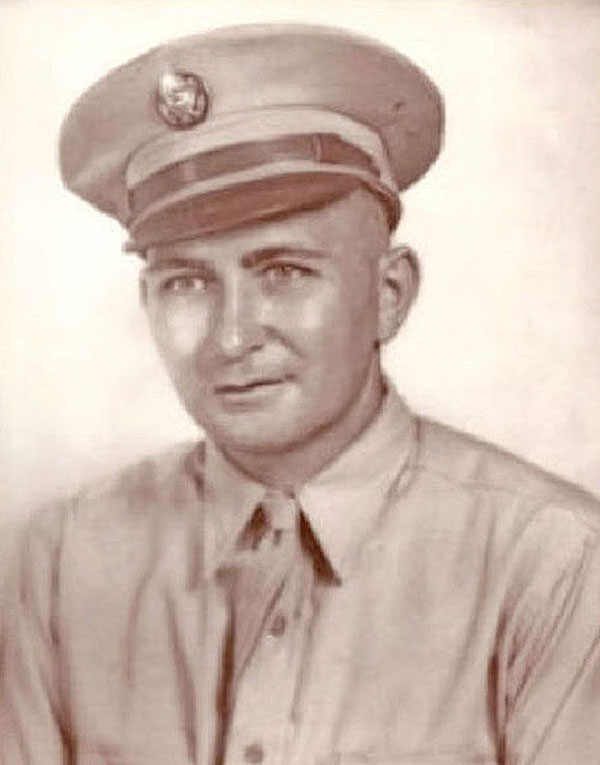
My father is buried in a country cemetery in Marion County, Florida. My mother and sister, my father’s kin are there too. There is a memorial stone in honor of loved ones who chose cremation. It bears the names of my brother, my husband, two of my three daughters; my name awaits a date. Sunlight filters softly through moss-draped oaks, and splashes across the granite tombstones. It is peaceful there. I think about the times that were and the times that might have been.
My father — I always called him Daddy — was a hunter. And my early childhood memories include walking with him in the woods as he hunted animals I didn’t want him to kill. So I made noises to scare away whatever animal that might find its way into his gunsight. I loved being in the woods with him. I hated the sound of his gun.
Once he gave me a deerskin rug. On cold mornings, it was warm and soft against my feet, but I was saddened to think that the rug was once a deer that ran free and wild in tranquil woods. I know that the meat of the deer and rabbits and birds that my father killed was a necessity for our family. But I could no longer go with Daddy when he hunted. It was sort of a mutual understanding.
Times were tough in my growing up years. We were in the Great Depression. Jobs were scarce. Pay for the jobs available was low. Yet, Mother and Daddy always made sure I had school lunch money — 15 cents a day back then. They often left for work before daylight and usually didn’t get home until after dark.
Daddy was a proud man. Except for showing his anger at times, he kept his feelings to himself. His anger was such that most everyone went to great lengths not to provoke him. He seemed cold and distant. I remember one day in particular when the car wouldn’t start and he took the tire iron and smashed all the car windows. It was scary. I imagine he felt more anger at himself when he discovered that the car had run out of gas.
I seldom tested my father. I was afraid of him although physical discipline was rare. And since he was a man of few words, he wasn’t verbally abusive either. I felt safe with him and Mother. I didn’t think anyone would dare hurt me or my brother.
There were times when Daddy surprised me. Sometimes, for no reason at all, he would bring home a watermelon “just for me.” Because of an exceptionally good report card, he once gave me a beautiful, pearl-colored pen and pencil set. When he was drafted into the Army and was in basic training, he sent me a Sonja Henie doll, complete with figure-skating costume and ice skates.
He gave me the best advice I ever received. “Always learn all you can,” he said. “It’ll come in handy some day.”
In the early 1940s, Daddy, who didn’t like to work for others, went into the pulp-wooding business. He had a couple of log trucks and crews that were kept pretty busy. Then there was Pearl Harbor that put us in World War II. He tried to enlist in the Army, but was turned down because of his age and his two children. Later, it didn’t matter that he had children. He was drafted.
Daddy got into the war just in time to go through the Battle of the Bulge. His expert marksmanship served him well. Although he was wounded several times, his wounds didn’t stop him from being part of the Occupation Forces that stayed in Germany after the war ended. He came home with a Bronze star, Purple Heart and other medals. I still have his sharp-shooter medal.
He was very strict. Because I couldn’t hang out with friends, I started working after school when I was (almost) 14. Since I was working, my mother convinced him to allow me to wear some makeup. My dad had set 16 as the age for wearing makeup and limited dating. He allowed some makeup, but didn’t budge on the dating.
And if I said he wasn’t fair, he told me as long as I remained under his roof, I would do things his way. I couldn’t wait to graduate from high school and turn 18. I didn’t want to live in his house under his rules. I wanted to make my own rules.
So, I joined the Army. Well, at least I wasn’t living under Daddy’s rules anymore and when I was off duty there was no one to tell me what to do. And the Army offered new opportunities. I was trained as a cryptographic technician, stationed at the Pentagon, and felt pride in serving my country.
I met my husband while I was in the Army. Although I opted for discharge, he had several years left to serve in the Air Force, so we were stationed at bases in several different states. After my husband got his discharge from the Air Force, we first lived in Florida, then in his home state of Kansas.
When I brought my first-born daughter to visit Mother and Daddy, I was pleased to see Daddy bounce her on his knee. It was the same with the two girls that followed. He would hold my daughters, listen to them sing their little songs, recite their just-learned poems and watch them perform their “plays.” He smiled at them and laughed with them. “Why,” I thought, “didn’t I know this side of you?”
We were living in Kansas when I got the call that Mother had pancreatic cancer. She had six months to live we were told. We rushed home. When I went into Mother’s hospital room, I saw a side of Daddy I had never known. He was at Mother’s bedside and he was crying. “He does care,” I thought.
He was at her side as she went through several hospital stays and a major operation. He prepared meals. He watched over her. Mother proved the doctors wrong. She didn’t die in six months. It was Daddy who died. In making sure he cared for Mother, he neglected his own health. He was felled by a stroke and never regained consciousness. In 1964 he died on Sept. 14. It was my middle daughter’s birthday.
Mother lived until 1997 and died of pancreatic cancer, the same disease she was diagnosed with in the early 1960s.
Daddy wasn’t a church-going man and he couldn’t abide “hypocrites.” But he had high regard for those he felt “lived the life they preached.” I wish I knew more about what he believed in, what he thought and why he thought it.
When I think of Daddy, I think of what might have been — If Daddy had been able to show the love I now know he must have felt; if our family had been a more open and loving family.
If. If. If. The futility of if. Times were different then. The Great Depression was a time of parents struggling to survive — to feed and shelter their family.
And so, when I think of Daddy, I think, “Thanks, Daddy, for your advice to always be willing to learn. I’m still learning.”
(This portrayal of a father’s love is based on Jesus’ parable of the prodigal son found in Luke, chapter 15.)
A Father's Love; His Wayward Son
Matthew’s heart grew heavy as his younger son’s words shattered his hopes and dreams.
Joel told his father he wanted no part of running the family farm. In fact, Joel wanted money, lots of money so he could leave home and seek, not greener pastures, but the glitter of the far-off city.
Matthew had expected that Joel and his older brother, Thomas, would take over the family estate of vineyards, farm and grazing lands. Yet, some part of Matthew knew that Joel had a yearning for a daring life filled with travel to faraway lands, a life filled with risk-taking fun. So when Joel asked for his share of the family wealth, Matthew didn’t lecture his son or warn of dire consequences. Nor did he try to shame him into staying.
Despite his disappointment and heavy heart, Matthew did as his son asked. Joel quickly gathered the possessions he wanted to take with him. With his newly possessed wealth, he left his father and his home. He was ready for the big city and all it promised.
His new life was a whirlwind of partying and gaming. He found many friends, at least he thought they were friends. They drank with him and hung out with him. And the women. They were so young and beautiful, so available. His money bought him the life he had dreamed of. For a few years Joel found himself among “the privileged.”
Then, hard times hit. His fabulous city lost its wealth, its luster. People lost everything. Joel lost everything, too. He faced starvation.
In desperation, he took the only job he could find. It was on a pig farm. Joel was so hungry, he was ready to eat the slop food he was feeding to the pigs.
It was then that Joel thought of home where there was plenty to eat. He thought of his father. Joel resolved to go to his father and admit he had made a mistake. He was depressed and desperate. He no longer considered himself worthy to be his father’s son. He would ask his father to hire him as a farm hand. He left the pig farm and began the long trek home.
Matthew saw him coming and was overjoyed. He ran to meet Joel and hugged and kissed him.
Joel told his dad that he had done many things that were wrong. “I have sinned against heaven,” he said. “I am not worthy to be called your son.” He asked his father to hire him as one of the servants who worked the land.
But Matthew saw before him his son. Matthew told the servants to fetch fine clothes for his son, shoes for his feet and a ring for his hand. They were to kill the calf that was penned for fattening. There would be a celebration. “For my son was dead, and is alive again,” said Matthew, “he was lost, and is found.”
Music, dancing and laughter filled the air. It reached the ears of Joel’s older brother as he was returning home from a day of hard work in the fields. Thomas demanded to know what was going on. One of the hired servants told him that his brother had come home and his father was celebrating Joel’s return.
Thomas was angry. He would not welcome his brother, and despite his father’s entreaty, he would not join the merriment.
That rascal brother of mine took your money and wasted it on prostitutes, Thomas told his father. And as soon as he returns broke, you kill the fatted calf for him. You never did that for me, even though I stayed here and worked hard for you.
Matthew was loving and patient with this son, too. Instead of railing him for his jealousy of his brother, Matthew said simply, “Son, you are ever with me, and all that I have is yours.” Welcoming your brother is the right thing to do, Matthew told Thomas. Your brother had been as dead, but is alive again. He had been lost but now “is found.”
The story is often called the parable of the prodigal son. Many pick up on the word “lost” and think wrongly that is what prodigal means.
Prodigal means wasteful. The younger son wasted or squandered his inheritance (and part of his life, too).
This loving and wise father understood that it would do no good to force his younger son to remain at home. He loved his son enough to allow him make his own choices in life, and hopefully learn from them, especially learn from those that prove to be harmful. The father’s love remained unconditional. And when his son returned, he didn’t lecture, judge or punish him. Instead, he allowed himself to feel the joy of his son’s return.
We aren’t told if the older brother reconciled with his younger brother. But with a father like this one, chances are good the older brother didn’t let his anger overcome his father’s love. Oh, that this be so.
This touching story told by Jesus is a reminder of the love of God. He loves us enough to give us the freedom to choose. And even when we make mistakes, He is ready to welcome and celebrate our return to Him.
Such was Jesus’ view of what a loving father should be. Don’t get the idea, however, that Jesus forgot the Commandment that says “Honor thy father and thy mother.”
There are at least six references to the commandment in the New Testament See: Matthew 15:4 and 19:19; Mark 7:10 and 10:19; Luke 18-20; and Ephesians 6:2.
Parents are due honor and respect from their children. Does that mean children have to respect every thing their parents do? No. Wrongful actions, hurtful actions, do not deserve respect no matter who does them. While the Commandment to “Honor thy father and thy mother,” addresses the child‘s responsibility, consider this advice:
Children, obey [your] parents in all things: for this is well pleasing unto the Lord. Fathers, provoke not your children to anger, lest they be discouraged. — Colossians 3:20-21, King James Version
Choice
God gave mankind the loving gift of choice:
Choice to do Good, or Choice to do Evil.
With Choice comes consquences:
Choice to do good yields good rewards; sometimes in this life; always in the life to come.
Choice to do evil yields punishment; sometimes in this life; always in the life to come.
"...for (God) maketh his sun to rise on the evil and on the good, and sendeth rain on the just and on the unjust." --Matthew 5:45
"As I live, saith the Lord GOD, I have no pleasure in the death of the wicked; but that the wicked turn from his way and live:" -- Ezekiel 33:11
A Good Man Makes A Good Father
To be a good father, one must first become a good man. The good man thrives on honesty, truthfulness, faithfulness, self-control, patience and kindness. He has the ability to forgive, to love, to nurture and protect. The man who builds his character on such qualities will be a good example for his children.
While it is true that one can be a moral man without faith in God, the concepts of goodness that come from God serve us well. Consider these scriptures:
- The fruit of the Spirit is love, joy, peace, longsuffering, gentleness, goodness, faith, meekness and temperance; against such there is no law. — Galatians 5:22-23
- Put away lying. Let every man speak truth with his neighbor, for we are members one of another. If you are angry, sin not; don’t let the sun go down upon your wrath. — Ephesians 4:25-26
- Don‘t give place to the devil. Let him that stole steal no more, but rather let him labor, working with his hands the thing which is good, that he may have to give to him with need. –Ephesians 4:28
- Let all bitterness and wrath, and anger, and clamor, and evil speaking, be put away from you, with all malice. –Ephesians 4:31
- And be ye kind one to another, tenderhearted, forgiving one another, even as God for Christ’s sake hath forgiven you. –Ephesians 4:32
- Let no man deceive you with vain words: for because of these things cometh the wrath of God upon the children of disobedience. — Ephesians 5:6
- Forbear one another, and forgive one another, if any man have a quarrel against any, even as Christ forgave you, so also do ye. — Colossians 3:13
- Speak evil of no man, be no brawlers, but gentle, showing all meekness unto all men. For we ourselves also were sometimes foolish, disobedient, deceived, serving divers lusts and pleasures, living in malice and envy, hateful, and hating oneanother. — Titus 3:3-4
- Let brotherly love continue. Be not forgetful to entertain strangers: for thereby some have entertained angels unawares. — Hebrews 13:1-2
- For whosoever shall keep the whole law, and yet offend in one point, he is guilty of all. What doth it profit, my brethren, though a man say he hath faith, and have not works? can faith save him? If a brother or sister be naked, and destitute of daily food, And one of you say unto them, Depart in peace, be ye warmed and filled; notwithstanding ye give them not those things which are needful to the body; what doth it profit? Even so faith, if it hath not works, is dead, being alone. — James 2:10-17
- Confess your faults one to another, and pray one for another, that ye may be healed. The effectual fervent prayer of a righteous man avails much. — James 5:16
- Beloved, let us love one another: for love is of God; and every one that loves is born of God, and knows God. He that loves not knows not God; for God is love. — 1 John 4:7-8
- There is no fear in love; but perfect love casts out fear: because fear hath torment. He that fears is not made perfect in love. If a man say, I love God, and hates his brother, he is a liar: for he that loves not his brother whom he hath seen, how can he love God whom he hath not seen? And this commandment have we from him, That he who loves God love his brother also. — 1John 4:18-21
- We then that are strong ought to bear the infirmities of the weak, and not to please ourselves. — Romans 15:1
Such admonitions are powerful and do not represent the easy road that so many lesser men
choose. The verses above also apply to women who want to be good women, good mothers.
(Bible verses were researched at www.biblegateway.com.)
Our Beautiful World

Morning in an unknown forest
The father of the righteous shall greatly rejoice: and he that begets a wise child shall have joy of him.
PROVERBS 23:24
“He was there when I didn’t understand, he was there when I was wrong, he was there when I cried, he was there when I lied. For some reason my dad was always there, when I needed him the most.”
MICHAEL JORDAN
Don’t force your children into your ways, for they were created for a time different from your own.
PLATO
Children, obey your parents in all things: for this is well pleasing unto the Lord. Fathers, provoke not your children to anger, lest they be discouraged. Colossians 3:20-21
Colossians 3:20-21
JESUS TO JUDGE OUR ACTIONS
One of Jesus’ most revealing teachings is about the judgment to come
when he takes into account how we treat one another:
Then shall he answer them, saying,
Verily I say unto you, Inasmuch as you did [it] not to one of the least of these, you did [it] not to me.
And these shall go away into everlasting punishment: but the righteous into life eternal. — Matthew 25:31-46
–Sermon is found in Matthew, Chapters 5-7